
Worn Garage Door Rollers in Round Rock, TX: Signs, Causes and When to Replace
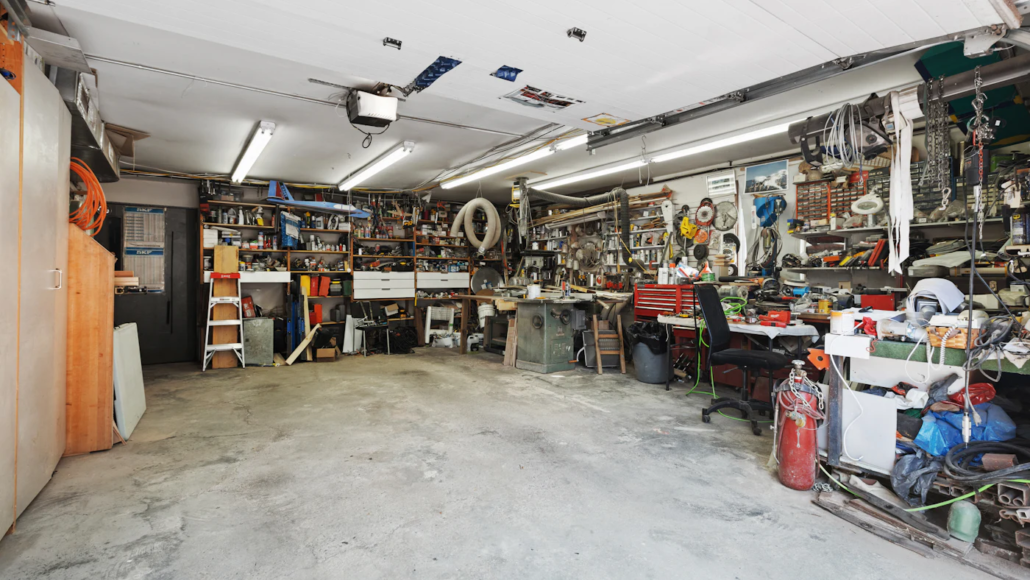
Rollers fail first because they move every time the door does. Noise, shaking and a door that sticks point to worn rollers, and replacing them early protects the track, the cables and the opener.
What Rollers Do and Why They Fail First
Rollers carry the door along the track. Every cycle turns each roller, so they wear out before most other parts. A worn roller makes noise, adds friction and can pop out of the track, which turns a small repair into an off-track door.
Seven Signs of Worn Rollers
- Grinding, rattling or squeaking while the door moves.
- Shaking or jerky movement.
- Cracks, flat spots or chips on the wheel.
- Rust on the stem or the wheel.
- A wheel that wobbles in the track.
- A door that feels heavier than before.
- A roller that slips out of the track.
Plastic, Steel and Sealed Nylon: How Each One Ages
Roller type changes how the roller wears. Steel rollers are sturdy but can be loud when dry. Plastic rollers are quieter at first but can crack with age and heat. Sealed nylon rollers are generally quieter and need less upkeep. Published lifespans vary widely and are rarely backed by a source, so R&Y does not quote a number of years.
What Wears Rollers Faster
Heavy use, summer heat in an uncooled garage, dirt in the track, a lack of lubrication and a track out of line all shorten roller life. In growing areas such as Round Rock, Georgetown and Pflugerville, doors used many times a day tend to show roller wear earlier.
Worn Rollers or a Track Problem?
If the noise follows the door along the whole travel, rollers are the likely cause. If it happens at one spot, the track may be dented or misaligned. A technician checks both at the same visit. See cable and roller repair for the full service.
Why Replace Rollers Together
When one roller fails, the rest have the same age. Replacing them together avoids a string of repeat visits. The bottom rollers sit on brackets tied to cable tension, so those are not a homeowner task.
Roller Types Compared
| Roller type | Noise level | Relative lifespan | Upkeep | Best use |
|---|---|---|---|---|
| Plastic | Quiet when new | Shorter | Low | Light use |
| Steel | Can be loud when dry | Medium | Regular lubrication | General use |
| Sealed nylon | Quietest | Longer | Low | Busy daily use |
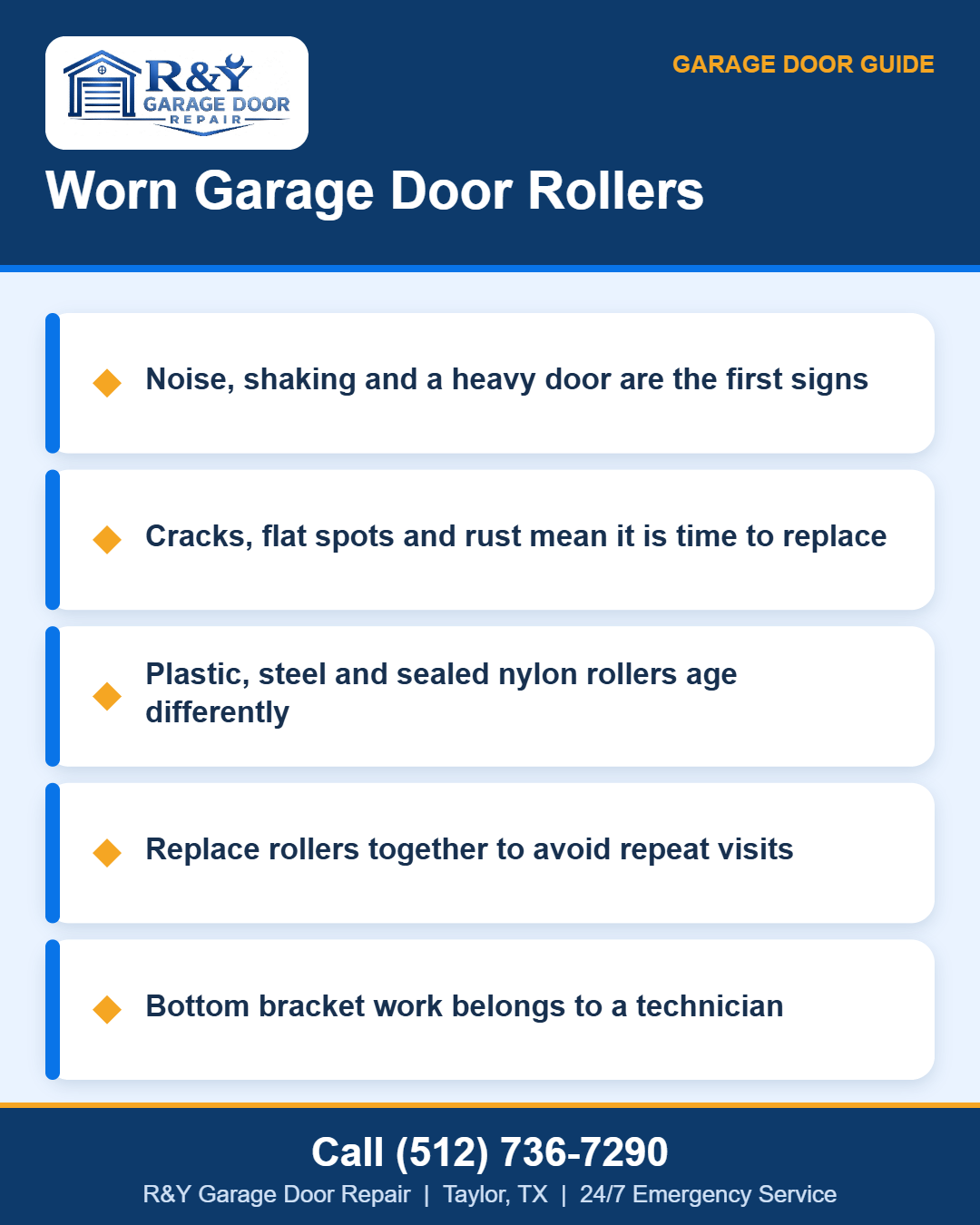
Download the infographic
A one-page summary of this guide with the key points. Free to save and share.
Frequently Asked Questions
How do I know if it is the rollers or the track?
Noise along the whole travel usually means the rollers. Noise or a snag at one spot suggests the track. A technician can tell on site.
Can I replace just the one that is noisy?
It is possible, but the others have the same wear. Replacing them together usually saves a second visit.
Does lubricating fix a worn roller?
Lubrication reduces friction on a healthy roller. A cracked or flat roller still needs replacement.
What should I do if a roller pops out of the track?
Stop using the door and keep people away. A door with a loose roller can twist and should be reset by a technician.
Sources
Need a garage door technician?
R&Y Garage Door Repair serves Taylor, Hutto, Round Rock, Georgetown, Pflugerville and nearby Central Texas cities. Free estimates and 24/7 emergency service.

Leave a Reply
Want to join the discussion?Feel free to contribute!