
Noisy or Heavy Garage Door in Taylor, TX: What Each Sound Means and When Balance Is the Real Problem
Sounds are clues: squeaks usually mean dry parts, grinding means worn rollers or gears, and a new bang with a heavy door points to the springs. A door that does not stay put halfway is out of balance and needs a technician.
Sudden Noise or Gradual Noise?
A noise that crept up over weeks usually means wear or dryness. A sudden loud noise, especially with a door that feels heavier, can mean a spring or cable has failed. The speed of change is the first clue.
Match the Sound to the Cause
The comparison table below lists the common sounds, where they come from and what is safe to check. In general, squeaks come from hinges and rollers, grinding from worn rollers or opener gears, rattling from loose hardware and booming from the springs.
What Homeowners Can Safely Check
Tightening visible bolts on brackets and hinges and lubricating hinges and roller stems are reasonable tasks. The springs, the cables and the brackets at the bottom corners carry high tension and are not homeowner tasks. DASMA lists these items as work for a trained technician.
The Balance Test in Five Steps
- Close the door.
- Pull the release cord to disconnect the opener.
- Lift the door by hand to about halfway.
- Let go carefully and watch.
- A balanced door stays put. If it drops or rushes up, it is out of balance.
The Consumer Product Safety Commission describes a balanced door as one that stays in any partly open position, and warns that a badly unbalanced door can fall.
When a Noise Points to Springs or Cables
A bang, a heavy door and an uneven lift together point to the spring system. The door should stay closed. See spring replacement and cable and roller repair.
How Central Texas Heat and Dust Change What You Hear
In a hot garage lubricant dries out and metal expands, so a door that was quiet in winter can squeak in summer. Dust in the track makes rollers grind. A yearly service resets these problems before they grow.
What a Technician Checks on a Noisy Door Visit
The technician inspects rollers, hinges, tracks, springs, cables and the opener, lubricates what should be lubricated, replaces what is worn and tests the balance. See maintenance plans.
Sounds, Causes and What to Do
| Sound | Where it comes from | Likely cause | Safe to check at home? | When to call |
|---|---|---|---|---|
| Squeak or chirp | Hinges, rollers | Dry parts | Yes, lubricate | If it returns quickly |
| Grinding | Track or opener | Worn rollers or gear | Look only | Soon |
| Rattle | Brackets, opener mount | Loose hardware | Yes, tighten visible bolts | If it continues |
| Pop or bang | Above the door | Spring under stress or failing | No | Immediately if the door is heavy |
| Slam on closing | Whole door | Spring or balance problem | No | Immediately |
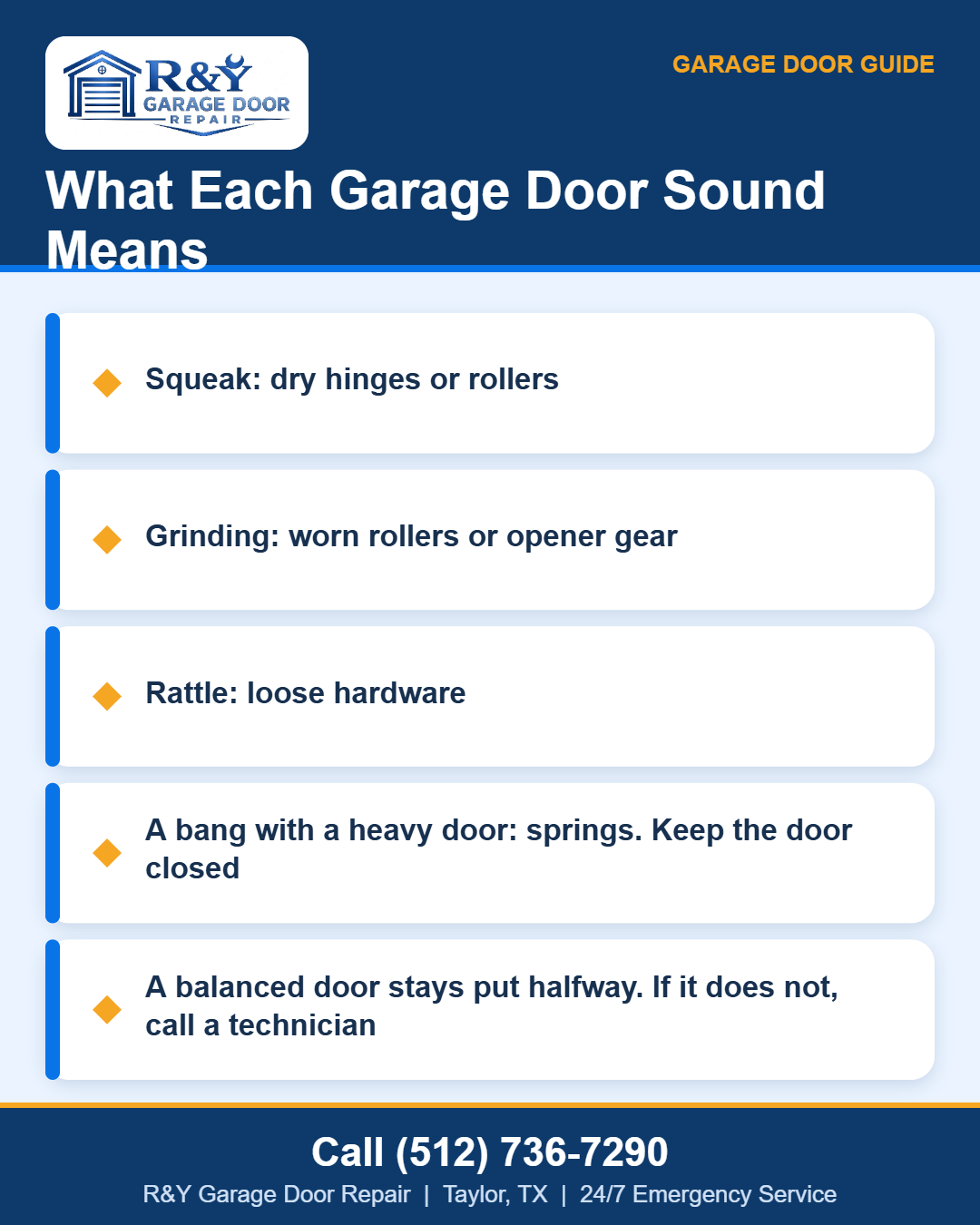
Download the infographic
A one-page summary of this guide with the key points. Free to save and share.
Frequently Asked Questions
Why does my door make noise only on hot mornings or after rain?
Heat dries lubricant and expands metal, while moisture can leave rust. Both change how parts move and sound.
Is a new sudden noise urgent?
It can be. A bang with a heavy or crooked door points to a spring or cable and the door should stay closed.
Can I lubricate the springs myself?
Springs are part of a high-tension system. A technician should handle them. Hinges and roller stems are the safer parts to lubricate.
Can the noise come from the opener instead of the door?
Yes. A grinding or buzzing sound near the motor points to the opener, while noise along the track points to the door.
Sources
Need a garage door technician?
R&Y Garage Door Repair serves Taylor, Hutto, Round Rock, Georgetown, Pflugerville and nearby Central Texas cities. Free estimates and 24/7 emergency service.

Leave a Reply
Want to join the discussion?Feel free to contribute!