
After a Hailstorm: How to Check Your Garage Door in Georgetown, Pflugerville and Taylor, TX
After hail, a door that looks only dented can hide bent tracks, damaged rollers or loose hardware. The door should be tested carefully before use, and damage should be documented before repairs.
First, Test the Door Safely
If the door sticks, tilts or stops partway after a storm, it should not be forced. Open and close it only if it moves smoothly, and stop if anything binds or looks bent.
What Hail Can Do Beyond Visible Dents
- Bent or shifted tracks.
- Cracked rollers and loose brackets.
- Creased sections that stress hinges.
- Damaged seals and sensors.
- Dents that make the door unbalanced.
A Step-by-Step Post-Storm Inspection
- Look at the whole door from outside and inside.
- Check the tracks for dents or gaps.
- Look at rollers and hinges.
- Check the sensors and seals.
- Test the balance with the opener disconnected, only if the door moves freely.
Documenting Damage for a Homeowners Claim
Photos with the date, close-ups of dents and a wide view of the door help an insurance claim. Whether hail damage to a garage door is covered depends on the policy, so the insurer should be asked directly. A technician can write what was found and what the repair involves.
Repair or Replace: How to Decide
A single dented section may be repaired or replaced if a matching one exists. Several damaged sections, a creased frame or an old door usually point to replacement. See section replacement and door replacement.
Wind and Storm Ratings: Reading the Label
Research from the Insurance Institute for Business and Home Safety found that a door failing in a storm can raise pressure inside the house and push on the roof and walls. Doors made before 2006 are likely not wind rated, so the label and the age of the door are worth checking.
Hail Size and What It Means
The National Weather Service uses a size guide for hail, and treats quarter-size hail, about one inch, as the threshold for a severe storm. Larger hail is more likely to damage standard steel panels, but smaller hail can still bend a track.
Hail Damage: What to Look For
| Damage seen | Possible functional risk | What to check | Repair or replace |
|---|---|---|---|
| One shallow dent | Low | Panel and hinge area | Often repair or leave |
| Creased dent near a hinge | Hinge and roller stress | Hinges and rollers | Section replacement |
| Several damaged sections | Balance and appearance | Whole door | Often replacement |
| Bent track | Door can come off track | Track and brackets | Repair; do not use |
| Damaged seals or sensors | Gaps and false stops | Seals and sensors | Replace the part |
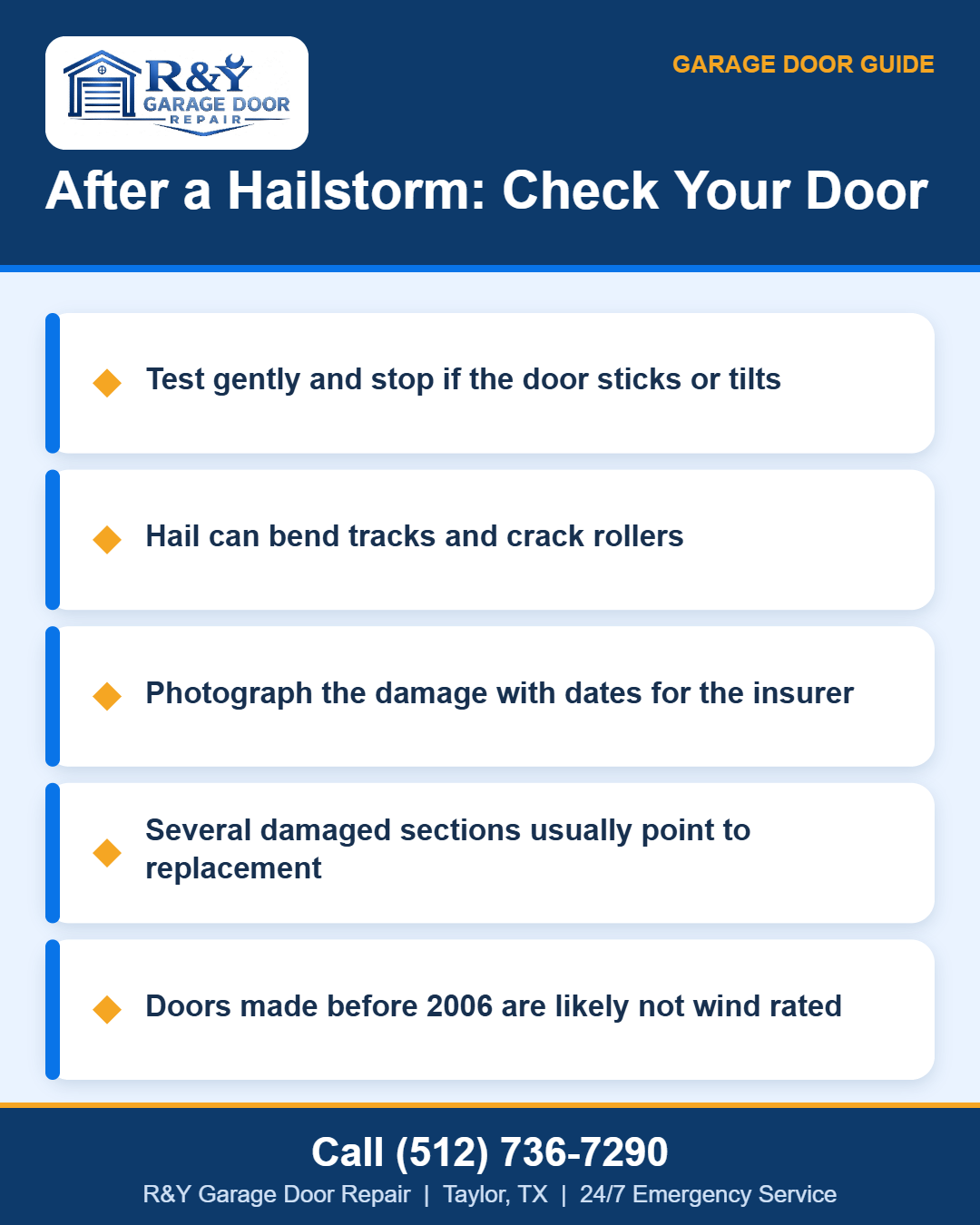
Download the infographic
A one-page summary of this guide with the key points. Free to save and share.
Frequently Asked Questions
Can a dented garage door still be unsafe even if it opens?
Yes. A dent can hide a bent track or damaged roller that makes the door unbalanced.
Should I stop using the door after a storm?
If it sticks, tilts or makes new noises, yes. Use it only if it moves smoothly.
Does homeowners insurance usually cover hail damage to a garage door?
It depends on the policy. The insurer is the right source, and documentation helps the claim.
How often should the door be checked during storm season?
After each significant storm and at least once before and once after the season.
Sources
Need a garage door technician?
R&Y Garage Door Repair serves Taylor, Hutto, Round Rock, Georgetown, Pflugerville and nearby Central Texas cities. Free estimates and 24/7 emergency service.

Leave a Reply
Want to join the discussion?Feel free to contribute!